
Protecting Beneficiary Outcomes in a Complex World
Summary of the article by André Choquet (Mathalian Partners), Sandy Trust (Baillie Gifford) and Faith Ward (formerly Brunel Pension Partnership) Article published in the spring edition of the Observer, Association of Canadian Pension Fund Management (ACPM) .
Climate change is no longer a slow, predictable trend that pension funds can model with a ruler. We argue that the world is entering a phase of nonlinear, cascading shocks that disrupt food, water, energy, finance and society all at once. The article points to the actuarial profession's warning of "Planetary Insolvency": a breakdown in which ecosystems can no longer reliably support the economy.
The 2026 picture is sobering. Large parts of the United States are in drought, and combined with fertiliser and oil price shocks this raises the prospect of food shortages and price inflation. Earth system tipping points, coral reefs chief among them, are sliding into danger zones, and the planet appears to be warming faster than carbon budgets assumed. Renewable deployment is at record highs, yet the authors are blunt that the transition now looks unlikely to keep warming within the Paris goals.
Pension administrators owe a duty to current and future beneficiaries. The article sets out two lenses. Single materiality looks only at how climate change affects a fund's risk and return. Double materiality also weighs how investments affect people and the planet. Most of Canada's largest pension plans have adopted the latter and committed to net zero by 2050.
Early climate scenario models produced reassuringly mild results even in high warming cases, a conclusion at odds with the science. The article sets out the criticisms of first generation linear temperature modelling, the omission of tipping points, and unrealistic assumptions of uninterrupted growth. The Bank of England, J.P. Morgan and the UK Pensions Regulator have since called for more realistic scenarios.
The article includes a case study from Brunel Pension Partnership, a UK pension pool which managed around £36bn. Brunel treated planetary boundaries as financially material risk factors rather than ethical constraints, working across climate, nature and social themes. In practice it pushes for enforceable net zero policy and carbon pricing, was an early adopter of the TNFD nature framework, and invests directly in natural capital such as organic farmland.
"For a long-term investor serving pension beneficiaries, accepting benchmark-relative underperformance in the short term to avoid systemic risk in the long term is not a values trade-off — it is fiduciary duty properly understood." Faith Ward
Fiduciaries can reposition portfolios and engage policymakers, and the tools now exist. What remains is knowledge, conviction and action.
Read the complete article in the linked PDF for the full argument, charts and references.
English webpage: https://www.acpm.com/observer
French webpage: https://www.acpm.com/fr-ca/observateur
© 2026 André Choquet, Sandy Trust and Faith Ward
Related reading

A summary of an interview with Faith Ward, published in the Dungeons of Science newsletter on 29 April 2026. The newsletter is produced by Manish Koirala, a science journalist based in Bāgmatī, Nepal
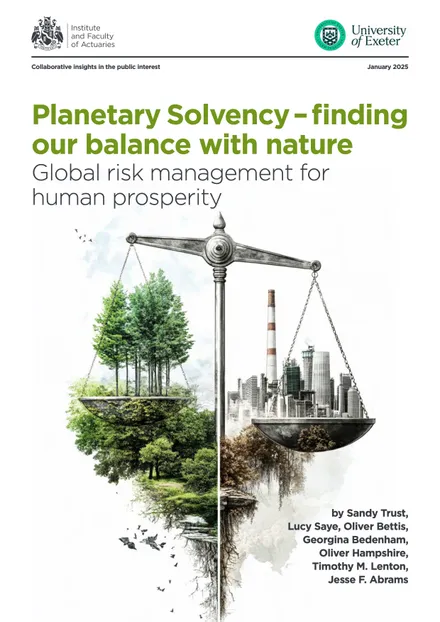
Highlighting the latest in a series of reports raising awareness of the financial impacts of system-level risks, this one focusing on the role of nature and related food systems risks, that make for essential reading for all asset owners, policy makers and others in the investment industry.
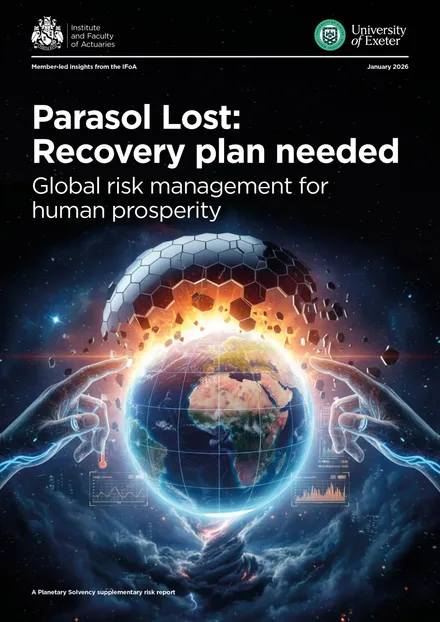
Faith Ward highlights investor responsibility and need for policymaker focus at planetary solvency report launch
This article is published under the following licence:
Terms of Use
See the Faith in RI terms of use on how this work can be used.
Read licence →